When patients walk into my office here in Kentucky and ask about medical marijuana, there’s often hesitation in their voice.
“Doctor… I don’t smoke. Does this mean I have to?”
That concern is completely valid.
For decades, cannabis has been associated with recreational smoking. But modern medical cannabis, especially under Kentucky’s regulated program, is very different from that image.
As a physician, my focus is not on “how people used it years ago.” My focus is on:
- Safe delivery
- Controlled dosing
- Evidence-based use
- Minimizing harm
And the good news is this:
No, smoking is not the only way to use medical marijuana. In Kentucky, it is not even the primary method permitted under the medical program.
Let’s walk through what research says, what Kentucky allows, and which options are considered safer.
What Kentucky’s Medical Cannabis Program Actually Allows
Kentucky’s medical cannabis framework is structured and medical-focused. It does not mirror recreational states.
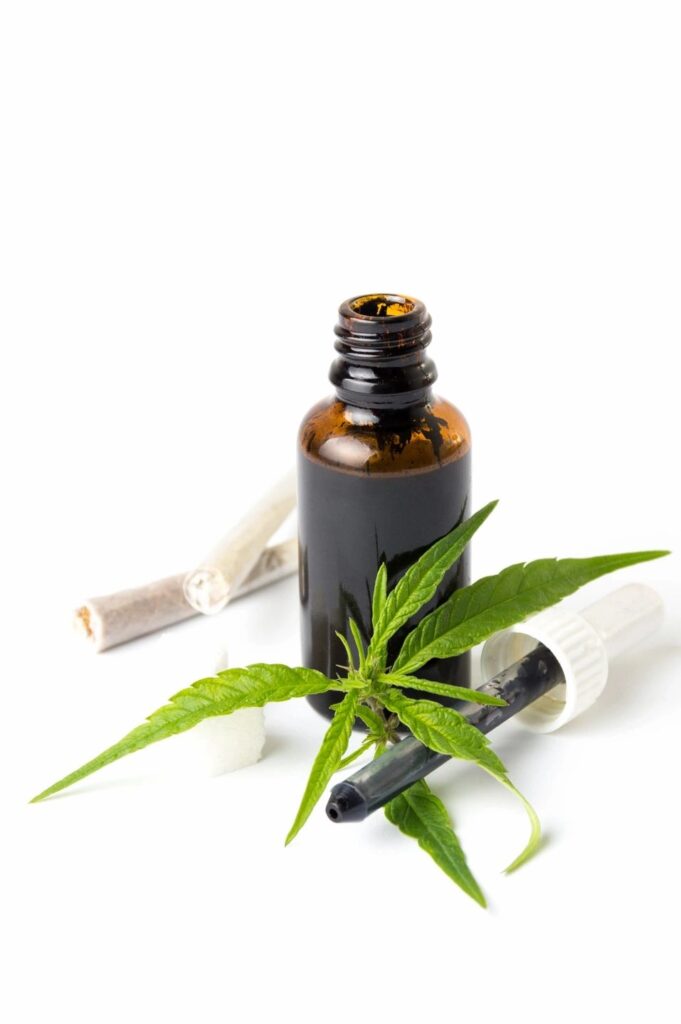
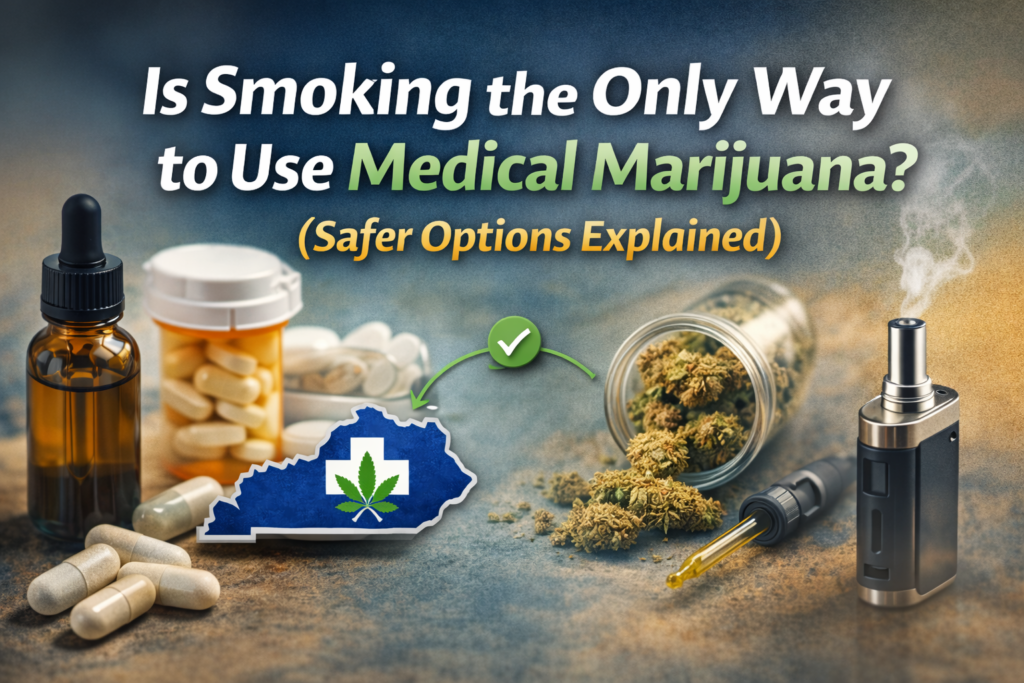
Under Kentucky law, non-combustible forms are emphasized. Patients may access approved formulations such as:
- Oils
- Tinctures
- Capsules
- Certain edible preparations (as permitted)
- Vaporized products (if compliant with regulations)
Raw plant material intended for smoking is not the central focus of Kentucky’s program.
That distinction matters. Kentucky designed its system around medical supervision and controlled dosing, not recreational-style smoking.
Why Physicians Generally Avoid Recommending Smoking
From a medical standpoint, inhaling combusted plant material carries risks.
According to the Centers for Disease Control and Prevention (CDC), marijuana smoke contains many of the same toxins, irritants, and carcinogens found in tobacco smoke.
Source: https://www.cdc.gov/marijuana/health-effects/lung-health.html
The National Institute on Drug Abuse (NIDA) also confirms that marijuana smoke contains harmful chemicals similar to those in tobacco smoke.
Source: https://nida.nih.gov/publications/research-reports/marijuana/what-are-marijuanas-effects-lung-health
This does not mean every patient who smokes will develop lung disease. But from a harm-reduction perspective, if safer delivery methods exist, we prioritize them.
Medicine is about minimizing unnecessary risk whenever possible.
Safer Alternatives to Smoking Medical Marijuana
Let’s review the options that are more commonly recommended in medical settings.
1. Tinctures (Sublingual Oils)
Tinctures are liquid cannabis extracts placed under the tongue.
How they work:
- Absorbed through oral tissues
- Onset typically within 15–45 minutes
- Effects last several hours
Why physicians prefer them:
- More predictable dosing
- Avoids lung exposure
- Easier to titrate (adjust dose gradually)
For conditions like chronic pain, anxiety, or sleep disorders, tinctures offer a balanced and controlled approach.
2. Capsules and Tablets
Capsules provide a standardized, measured dose.
Onset:
30–90 minutes (digested and metabolized)
Duration:
Often 6–8 hours or longer
This method is useful for:
- Neuropathic pain
- Multiple sclerosis-related symptoms
- Long-term pain management
A 2017 report from the National Academies of Sciences, Engineering, and Medicine found substantial evidence that cannabis or cannabinoids are effective for chronic pain in adults, chemotherapy-induced nausea, and multiple sclerosis spasticity.
Source: https://nap.nationalacademies.org/catalog/24625/the-health-effects-of-cannabis-and-cannabinoids
Notice the wording: cannabinoids, not smoking. The therapeutic effect comes from the compounds, not the combustion process.
3. Edibles (When Permitted)
Edibles work similarly to capsules but may come in infused forms allowed under state regulations.
However, dosing must be approached carefully.
A study published in JAMA (Journal of the American Medical Association) noted that overconsumption is more common with edibles due to delayed onset of effects.
Source: https://jamanetwork.com/journals/jama/fullarticle/2338251
This is why medical supervision matters.
With edibles:
Start low.
Increase gradually.
Avoid re-dosing too quickly.
4. Vaporization (Without Combustion)
Vaporization heats cannabis to release cannabinoids without burning plant material.
This reduces exposure to many harmful combustion byproducts.
According to NIDA’s Marijuana Research Report, vaporization may reduce respiratory irritation compared to smoking, although long-term safety data is still being studied.
Source: https://nida.nih.gov/publications/research-reports/marijuana
While not completely risk-free, vaporization is generally considered less harmful than traditional smoking.
Why Delivery Method Matters for Kentucky Patients
Kentucky’s medical cannabis system is designed for:
- Physician oversight
- State-regulated products
- Controlled dosing
- Structured treatment plans
The goal is symptom relief, not intoxication.
Choosing the right method depends on your condition:
Chronic pain → Tincture or capsule
Sleep disturbance → Controlled capsule or edible
Breakthrough symptoms → Doctor-guided inhalation method
Medical cannabis should function like any other treatment: tailored to your health profile.
Is Smoking Ever Recommended?
In modern clinical settings, smoking is rarely the first-line recommendation.
The issue isn’t whether cannabis works, research supports its therapeutic potential for certain conditions.
The issue is delivery.
Smoking:
- Produces variable dosing
- Exposes lungs to combustion byproducts
- Is harder to standardize
In contrast, oils, capsules, and regulated extracts provide controlled and measurable dosing, which is critical in medicine.
The Evidence Focuses on Cannabinoids — Not Smoke
The therapeutic effects of cannabis come from compounds such as THC and CBD.
The National Academies of Sciences report concluded there is substantial evidence supporting cannabis for certain medical conditions — but it did not conclude that smoking is necessary for those benefits.
Source: https://nap.nationalacademies.org/catalog/24625/the-health-effects-of-cannabis-and-cannabinoids
Delivery method affects safety, consistency, and patient outcomes.
That’s why we individualize treatment plans.
A Physician’s Practical Advice
If you’re considering medical marijuana in Kentucky:
- You likely will not be smoking it under current state structure
- You will be guided toward regulated, non-combustible forms
- You will receive dosage counseling
- Your treatment plan will be structured
Medical cannabis should be approached like any other therapy, with clarity and oversight.
Final Takeaway
Smoking is not the only way to use medical marijuana.
For Kentucky patients, it is not the primary pathway under the state’s regulated system.
Safer alternatives such as tinctures, capsules, and physician-guided vaporization provide:
- Controlled dosing
- Reduced lung exposure
- More consistent therapeutic results
The goal is not access alone.
The goal is safe, structured medical care.
How Medcard District Helps You Choose the Right Option
At Medcard District, patients don’t just receive a card. They receive guidance.
We:
- Evaluate qualifying conditions
- Review your medical history
- Explain Kentucky-specific regulations
- Discuss safe delivery options
- Help structure an appropriate treatment plan
Medical marijuana should never feel confusing or risky.
It should feel informed, monitored, and medically supported.
If you’re ready to explore whether medical cannabis is right for you in Kentucky, start with a proper evaluation, and make that decision with medical clarity.