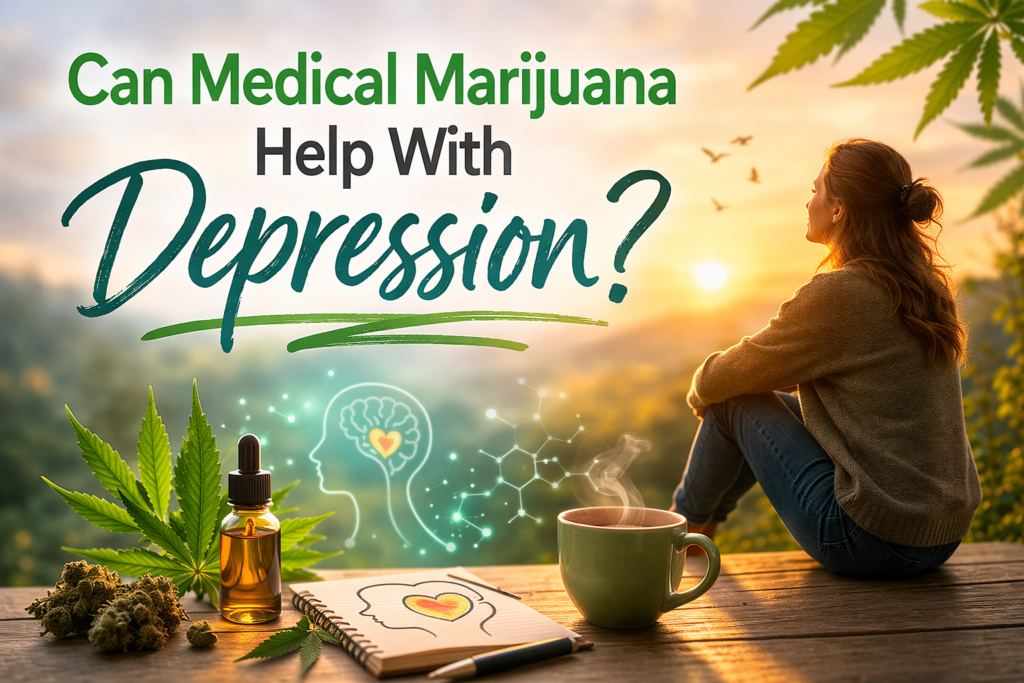
If you’ve been struggling with depression, you’ve probably asked yourself this question at some point:
“Could medical marijuana actually help me feel better?”
It’s a question many patients are asking today. Depression affects millions of people, and while traditional treatments like therapy and medication help many individuals, they don’t work for everyone.
Because of that, some patients are exploring whether medical marijuana might play a role in managing their symptoms.
Let’s talk about it.
First, Let’s Understand Depression
Depression isn’t just feeling sad for a few days.
Clinical depression is a serious mental health condition that can affect how you think, feel, and function in daily life.
Common symptoms include:
- Persistent sadness or emptiness
- Loss of interest in activities you used to enjoy
- Trouble sleeping or sleeping too much
- Low energy or fatigue
- Difficulty concentrating
- Changes in appetite
- Feelings of hopelessness
For many patients, treatment includes therapy, lifestyle changes, and medications such as antidepressants.
But sometimes symptoms continue even with treatment, which is why some people begin asking about alternative options.
How Medical Marijuana Works in the Body
Medical marijuana contains compounds called cannabinoids. The two most well-known are:
THC (tetrahydrocannabinol)
This compound can affect mood, relaxation, and perception.
CBD (cannabidiol)
CBD does not cause a “high” and is often associated with calming and anti-anxiety effects.
These compounds interact with the body’s endocannabinoid system, a biological system involved in regulating things like:
- Mood
- Sleep
- Stress response
- Appetite
- Emotional balance
Because this system helps regulate mood, researchers are studying whether cannabinoids may influence depressive symptoms.
Can Cannabis Actually Help With Depression?
The answer isn’t completely simple.
Some patients report that medical marijuana helps with symptoms commonly associated with depression, such as:
- Anxiety
- Insomnia
- Chronic stress
- Lack of appetite
Improving these symptoms can sometimes improve overall mood and quality of life.
However, research results are mixed. Some studies suggest potential benefits, while others warn that certain types or high doses of cannabis may actually worsen depression in some individuals.
This is why medical supervision is important.
Potential Benefits Some Patients Report
When used carefully and under medical guidance, some patients say medical marijuana helps them with:
Sleep Improvement
Sleep problems are extremely common in people with depression. Certain cannabis strains may help patients fall asleep more easily.
Reduced Anxiety
Anxiety often overlaps with depression. CBD-dominant products may help calm the nervous system.
Stress Relief
Cannabis may help some individuals feel more relaxed, which can reduce emotional strain.
Improved Appetite
Depression can reduce appetite. THC can sometimes help restore normal eating patterns.
These improvements don’t necessarily “cure” depression, but they may help manage related symptoms.
Important Risks to Consider
Medical marijuana is not a perfect solution, and it’s important to talk honestly about the risks.
For some people, cannabis may:
- Increase anxiety
- Cause mood swings
- Affect motivation or concentration
- Worsen symptoms if used in high doses
People with certain mental health conditions, especially severe mood disorders or psychosis, may need to avoid cannabis altogether.
That’s why professional medical guidance matters.
Is Depression a Qualifying Condition in Kentucky?
Kentucky’s medical marijuana program focuses on specific qualifying conditions such as:
- Chronic pain
- Cancer
- PTSD
- Multiple sclerosis
- Severe nausea
- Muscle spasms
- Epilepsy
Depression alone is not currently listed as a qualifying condition.
However, many patients with depression also experience other qualifying symptoms like chronic pain, PTSD, or severe anxiety, which may make them eligible.
A licensed medical professional can help determine whether you qualify under Kentucky’s guidelines.
A Quick Safety Reminder
If you are considering medical marijuana for depression, keep these important points in mind:
- Never stop prescribed antidepressants without speaking to your doctor
- Start with low doses if cannabis is recommended
- Avoid driving or operating machinery while impaired
- Follow Kentucky medical marijuana laws carefully
The goal is improving your mental health safely and responsibly.
A Doctor’s Honest Perspective
Depression is complex, and there’s rarely a single solution that works for everyone.
For some patients, traditional treatments like therapy and antidepressants provide significant relief.
For others, medical marijuana may help manage symptoms like sleep issues, anxiety, or chronic stress when used carefully under medical supervision.
The key is personalized care and informed decision-making.
How Med Card District Can Help You
If you’re wondering whether medical marijuana might be appropriate for your condition, Med Card District can guide you through the process safely and legally.
We connect Kentucky patients with licensed medical professionals who understand cannabis medicine and state regulations.
Our patient-focused process includes:
- Evaluating your medical condition to see if you qualify
- Explaining cannabis treatment options in clear, simple language
- Guiding you through the Kentucky medical marijuana card process step by step
- Helping you understand legal limits and safe usage
There’s no confusing paperwork or guesswork. Just professional guidance designed to help you make informed decisions about your health.
If you’re exploring medical marijuana as part of your treatment journey, Med Card District is here to help you take the next step safely and confidently.