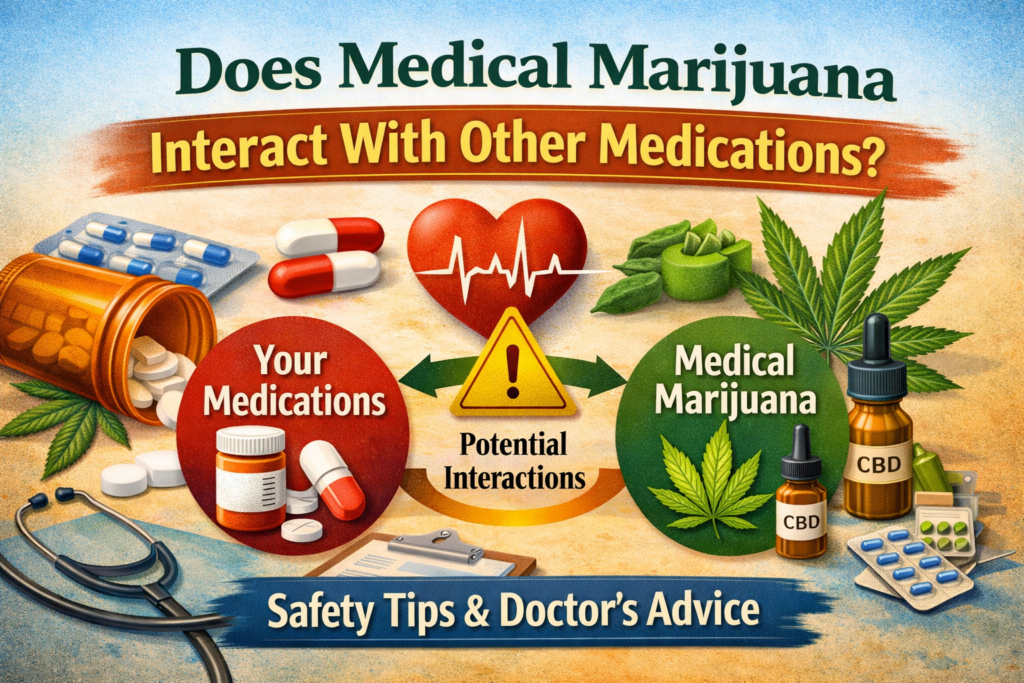
Medical marijuana is becoming a mainstream treatment option for many chronic conditions from pain and nausea to epilepsy and PTSD. But one of the biggest clinical questions I get from patients is:
“Can medical marijuana interact with the other medications I’m already taking?”
The short answer is: yes, it absolutely can. But the full answer isn’t black and white. What follows is an evidence‑based, patient‑focused explanation straight from clinical research and pharmacology literature so you can understand why interactions happen, which medications are most affected, and most importantly, how to use cannabis safely alongside your other prescriptions.
Let’s walk through this in a way that’s medically accurate, practical, and easy to apply to real life.
1. How Medications Interact in the Body
Before we talk about cannabis specifically, it helps to understand how drug interactions happen in general.
When you take any medication, whether it’s a prescription, an over‑the‑counter drug, or an herbal supplement, your body must absorb, distribute, metabolize, and eliminate it. Most of this processing happens in the liver, where certain enzymes (especially the cytochrome P450 family) break down drugs so they can be used or cleared from your system.
Most drug‑drug interactions occur in one of two ways:
1. Pharmacokinetic interactions
This is when one substance changes the way another is absorbed, metabolized, or eliminated. For example, if Drug A slows down the enzyme that clears Drug B, Drug B will stick around longer and could reach toxic levels.
2. Pharmacodynamic interactions
This happens when two drugs have similar effects on the body and those effects add up. For instance, two sedatives taken together may cause dangerously deep sedation.
Medical marijuana can be part of both types of interactions.
2. Why Cannabis Interacts With Other Medications
The two primary active compounds in cannabis are:
- THC (tetrahydrocannabinol): The psychoactive component most people associate with the “high.”
- CBD (cannabidiol): Non‑psychoactive, widely studied for pain, anxiety, seizures, and inflammation.
Both THC and CBD are metabolized by the liver’s CYP450 enzyme system. These same enzymes also process many widely‑used medications. That means cannabis compounds can inhibit or induce these enzymes, changing how other drugs are metabolized.
Here’s how that plays out clinically:
THC and CBD can interfere with liver enzymes
- THC and CBD are both substrates and modulators of CYP450 enzymes.
- CBD in particular can inhibit certain metabolic pathways, meaning other drugs break down more slowly.
- This can increase blood levels of those medicines, potentially leading to side effects that are stronger or more dangerous than expected.
In simple terms, if your liver is busy processing THC or CBD, it may not handle your other medications the way it normally does. That’s why interactions happen.
3. Which Medications Are Most Likely to Interact?
Not every drug interacts with cannabis, and not all interactions are dangerous. But evidence from clinical research and systematic reviews shows that certain classes of medications should raise red flags:
Blood Thinners
Cannabis, especially CBD, can increase the effect of drugs like warfarin, raising bleeding risk. This is one of the better‑documented pharmacokinetic interactions.
Antiepileptic Drugs (AEDs)
Some seizure medications like clobazam can have altered blood levels when used with CBD, potentially necessitating dose adjustments.
Immune Suppressants
Drugs like tacrolimus appear to have high‑risk interactions with cannabis compounds, potentially increasing toxicity.
Sedatives and Anti‑Anxiety Meds
Cannabis can potentiate the effects of benzodiazepines (like alprazolam) and sleep aids, leading to excessive sedation. These are pharmacodynamic interactions that can affect alertness and coordination.
Heart Medications and Blood Pressure Drugs
THC can affect heart rate and blood pressure, sometimes unpredictably, especially in patients on beta‑blockers or calcium channel blockers.
Antidepressants and Antipsychotics
There’s limited but suggestive evidence that cannabis may alter the side effect profiles of some psychiatric medications, particularly in higher doses.
4. What the Clinical Evidence Actually Says
Clinical research on cannabis‑drug interactions is still developing, and high‑quality evidence is limited. However, systematic analyses and pharmacological studies have identified relevant interactions:
- A 2024 systematic review found cannabis interactions with 20 different drug classes, with some (like warfarin and clobazam) ranking as high‑risk based on severity and probability.
- Older rapid response reports also note that cannabinoids inhibit key liver enzymes, meaning they can slow the metabolism of many drugs.
Despite limited guideline‑level evidence, pharmacologists and clinicians treat these interactions seriously, especially in patients taking narrow‑therapeutic‑index drugs like blood thinners or immunosuppressants.
5. How to Recognize When an Interaction May Be Happening
It’s not always obvious when a drug interaction is occurring, but here are signs to watch for:
- Excessive sedation or confusion
- Unexpected changes in blood pressure or heart rate
- Unusual bleeding or bruising (if on blood thinners)
- Increased side effects from your other meds
- Unexplained worsening of your symptoms
If any of these happen after starting medical marijuana, especially within the first week, get medical advice promptly.
6. Practical Strategies to Minimize Interactions
Safety is a team effort between you and your healthcare provider. If you’re considering medical marijuana, here’s how to approach it intelligently:
1. Share Your Full Medication List
Tell your doctor about everything you take, prescriptions, over‑the‑counter drugs, and supplements.
2. Start at Very Low Doses
Especially with CBD‑rich products, start low and titrate slowly under medical supervision.
3. Monitor for Symptoms Regularly
Keep a symptom log during the first 2‑4 weeks of treatment.
4. Coordinate With Your Pharmacist
Pharmacists are trained specifically to evaluate drug‑drug interactions.
5. Adjust Doses When Necessary
Sometimes your other medications may need a dose reduction once cannabis is introduced, but only under medical guidance.
7. Different Forms of Cannabis Have Different Risks
Medical cannabis isn’t a single product — it includes oils, tinctures, edibles, smoked flower, and more. Pharmacokinetics vary by form:
- Edibles: go through first‑pass liver metabolism, interactions more likely.
- Tinctures: sublingual absorption, somewhat less first‑pass effects.
- Smoking/Vaping: quicker onset but still metabolized by the liver eventually.
- Topicals: minimal systemic absorption, lowest risk of interaction.
Choosing the right form, especially for patients on multiple medications, is something your clinician should help you decide.
8. Special Considerations for Certain Patients
Elderly Patients
Older adults are more likely to be on multiple medications and have altered drug metabolism. This increases the potential for interactions.
Organ Transplant Patients
Drugs like tacrolimus are critical for graft survival, any interaction that increases levels can be dangerous.
Patients on Anticoagulants
Blood thinners require careful monitoring, cannabis can make therapeutic ranges unpredictable.
9. The Bottom Line: Yes, Interactions Are Real (But Manageable)
Medical marijuana can interact with other medications, particularly those that are metabolized by the liver’s enzyme systems or that have strong central nervous system effects. The science is clear that cannabis compounds like THC and CBD affect drug metabolism pathways, especially the CYP450 enzymes.
But with thoughtful clinical supervision, careful monitoring, and open communication with your healthcare team, these interactions can be identified early and managed safely.
How Med Card District Helps You Navigate This Safely
Understanding drug interactions is a key part of becoming a medical marijuana patient — and at Med Card District, we take that seriously.
Med Card District is a licensed medical cannabis clinic now serving patients across the entire United States, specializing in safe, legal, and medically responsible certification for state medical marijuana programs. Whether you live in Kentucky, California, New York, or anywhere in between, our team can help you navigate the process.
Here’s how we support patients:
Telehealth Appointments Nationwide
You don’t have to visit a clinic in person. We now offer secure online telehealth appointments, so you can consult with a licensed doctor from the comfort of your home, anywhere in the U.S.
Comprehensive Medication Review
Our licensed medical cannabis doctors review your full medication list, not just your qualifying condition, to identify potential interactions and risks.
Evidence‑Based Guidance
Recommendations are based on the latest clinical research, not guesswork.
Personalized Care
Every evaluation is tailored to your health history, medications, and treatment goals.
Becoming a medical marijuana patient isn’t just about getting a card, it’s about doing it safely, especially when other medications are part of your treatment plan. At Med Card District, we make this process simple, personalized, and accessible nationwide.