Fibromyalgia is one of the most challenging chronic pain conditions to live with. Unlike a broken bone or an inflamed joint, the pain often has no visible cause, yet it can affect nearly every aspect of daily life.
People living with fibromyalgia frequently experience widespread pain, constant fatigue, poor sleep, brain fog, and muscle stiffness. Even simple activities like walking, working, or getting out of bed can become difficult.
Traditional medications help many patients, but they don’t work for everyone. Some people continue to experience pain despite trying multiple treatments, while others struggle with unwanted side effects.
Because of this, more patients across the United States are asking:
Can medical marijuana help fibromyalgia?
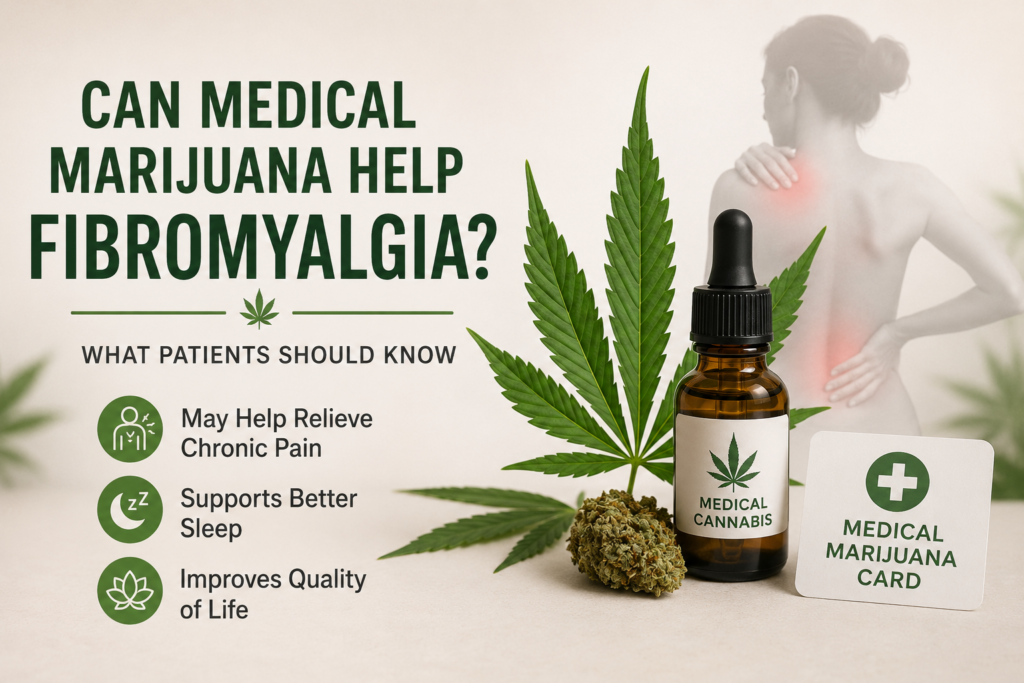
Current research suggests that medical cannabis may help some people manage fibromyalgia symptoms, particularly chronic pain, sleep disturbances, and overall quality of life. However, it isn’t a cure, and the results vary from person to person.
Let’s examine what the medical evidence says.
Understanding Fibromyalgia
Fibromyalgia is a long-term disorder that affects how the brain and nervous system process pain signals.
Instead of responding normally to pain, the nervous system becomes more sensitive, causing ordinary sensations to feel painful.
Common symptoms include:
- Widespread muscle and joint pain
- Persistent fatigue
- Sleep disturbances
- Morning stiffness
- Headaches
- Difficulty concentrating (“fibro fog”)
- Anxiety or depression
Researchers still don’t fully understand why fibromyalgia develops, but genetics, stress, infections, and physical trauma may all play a role.
How Medical Marijuana May Help
Medical marijuana works through the endocannabinoid system (ECS), a network of receptors involved in regulating:
- Pain perception
- Inflammation
- Sleep
- Mood
- Stress response
- Immune function
The two best-known cannabinoids are:
THC
THC (tetrahydrocannabinol) is responsible for the psychoactive effects of cannabis.
It may help:
- Reduce chronic pain
- Relax muscles
- Improve sleep
- Increase appetite when needed
CBD
CBD (cannabidiol) does not produce a “high.”
Research suggests it may help:
- Reduce inflammation
- Ease anxiety
- Improve sleep quality
- Support pain management
Many medical cannabis products contain both THC and CBD to balance their effects.
What Does the Research Say?
Although research is still developing, several studies suggest cannabis may improve certain fibromyalgia symptoms.
A review published in the Journal of Clinical Medicine found that cannabinoids may help reduce pain intensity and improve sleep quality in some patients with fibromyalgia.
Another systematic review published by the National Center for Biotechnology Information (NCBI) concluded that cannabis-based medicines may provide meaningful symptom relief for selected patients, although larger clinical trials are still needed.
The National Academies of Sciences, Engineering, and Medicine also reported substantial evidence that cannabis can help treat chronic pain in adults, one of fibromyalgia’s primary symptoms.
Potential Benefits for Fibromyalgia Patients
1. Chronic Pain Relief
Pain is the hallmark symptom of fibromyalgia.
Unlike traditional pain medications, cannabinoids affect pain signalling through different neurological pathways.
Some patients report:
- Less widespread pain
- Reduced tenderness
- Better tolerance for daily activities
2. Better Sleep
Many people with fibromyalgia struggle to achieve restorative sleep.
Poor sleep often worsens pain, creating a difficult cycle.
Medical marijuana, particularly products containing THC, may help:
- Fall asleep faster
- Stay asleep longer
- Improve sleep quality
Better sleep may also reduce daytime fatigue.
3. Reduced Muscle Stiffness
Muscle tightness and stiffness are common complaints.
Some patients report improved muscle relaxation after using medical cannabis, making movement easier.
4. Improved Quality of Life
When pain becomes more manageable, patients often experience improvements in:
- Daily functioning
- Physical activity
- Mood
- Social interactions
- Overall wellbeing
What Are the Risks?
Medical marijuana isn’t appropriate for everyone.
Possible side effects include:
- Drowsiness
- Dry mouth
- Dizziness
- Impaired coordination
- Short-term memory changes
- Increased heart rate
Higher THC doses may also increase anxiety in some individuals.
Because everyone responds differently, treatment should always begin with low doses under medical supervision.
Can Medical Marijuana Replace Fibromyalgia Medications?
Usually, no.
Most physicians view medical cannabis as a complementary treatment rather than a replacement for existing therapies.
Patients should never stop prescribed medications without speaking to their healthcare provider.
Many people achieve the best results using a combination of:
- Medication
- Physical therapy
- Exercise
- Stress management
- Healthy sleep habits
- Medical cannabis (when appropriate)
Is Fibromyalgia a Qualifying Condition?
Qualification depends on state law.
Some states specifically recognise fibromyalgia as a qualifying condition.
Others approve patients under broader categories such as:
- Chronic pain
- Severe muscle spasms
- Neurological disorders
Even when fibromyalgia isn’t listed by name, many patients may still qualify depending on their symptoms and state regulations.
How Med Card District Can Help
If you’re considering medical marijuana for fibromyalgia, the first step is receiving a professional evaluation.
At Med Card District, licensed medical marijuana physicians evaluate your symptoms through a secure telehealth appointment, allowing you to speak with a doctor from the comfort of your home.
During your evaluation, the physician will:
- Review your medical history
- Discuss your fibromyalgia symptoms
- Determine whether you may qualify under your state’s medical cannabis programme
- Explain the differences between THC and CBD
- Answer your questions about safe cannabis use
- Guide you through your state’s certification process if you’re approved
With a 99% approval rate and a 100% money-back guarantee if you don’t qualify, Med Card District makes the process straightforward, supportive, and patient-focused.
Safety Tips for Fibromyalgia Patients Using Medical Marijuana
If you’re approved for medical cannabis:
- Start with the lowest effective dose.
- Increase slowly under medical guidance.
- Avoid driving while impaired.
- Do not combine cannabis with alcohol or sedatives unless advised by your doctor.
- Keep follow-up appointments to monitor your progress.
- Store cannabis products safely away from children and pets.
Frequently Asked Questions
Can CBD alone help fibromyalgia?
Some patients report benefits from CBD, particularly for anxiety and inflammation. Others may benefit from products containing both CBD and THC.
Will medical marijuana cure fibromyalgia?
No.
Medical marijuana helps manage symptoms but does not cure fibromyalgia.
Is medical marijuana safe for long-term use?
Current evidence suggests it can be used long term under proper medical supervision, although ongoing monitoring is important.
Can I work while using medical marijuana?
Many patients can continue working, but they should avoid working or driving while experiencing THC-related impairment.
Final Thoughts
Fibromyalgia affects millions of Americans, and finding effective symptom relief can be frustrating.
While medical marijuana isn’t a cure, growing clinical evidence suggests it may help reduce chronic pain, improve sleep, ease muscle stiffness, and enhance quality of life for some patients.
The key is using cannabis responsibly, under the guidance of a licensed medical professional who understands both your condition and your state’s medical marijuana laws.
If you’re wondering whether medical marijuana may be appropriate for your fibromyalgia symptoms, Med Card District can connect you with experienced physicians who provide convenient telehealth evaluations and guide you through every step of the certification process.
External Sources
- National Academies of Sciences, Engineering, and Medicine – The Health Effects of Cannabis and Cannabinoids: https://nap.nationalacademies.org/catalog/24625/the-health-effects-of-cannabis-and-cannabinoids
- Journal of Clinical Medicine – Cannabis for the Treatment of Fibromyalgia: https://www.mdpi.com/journal/jcm
- National Center for Biotechnology Information (NCBI) – Cannabinoids for Fibromyalgia: Systematic Review: https://www.ncbi.nlm.nih.gov/pmc/