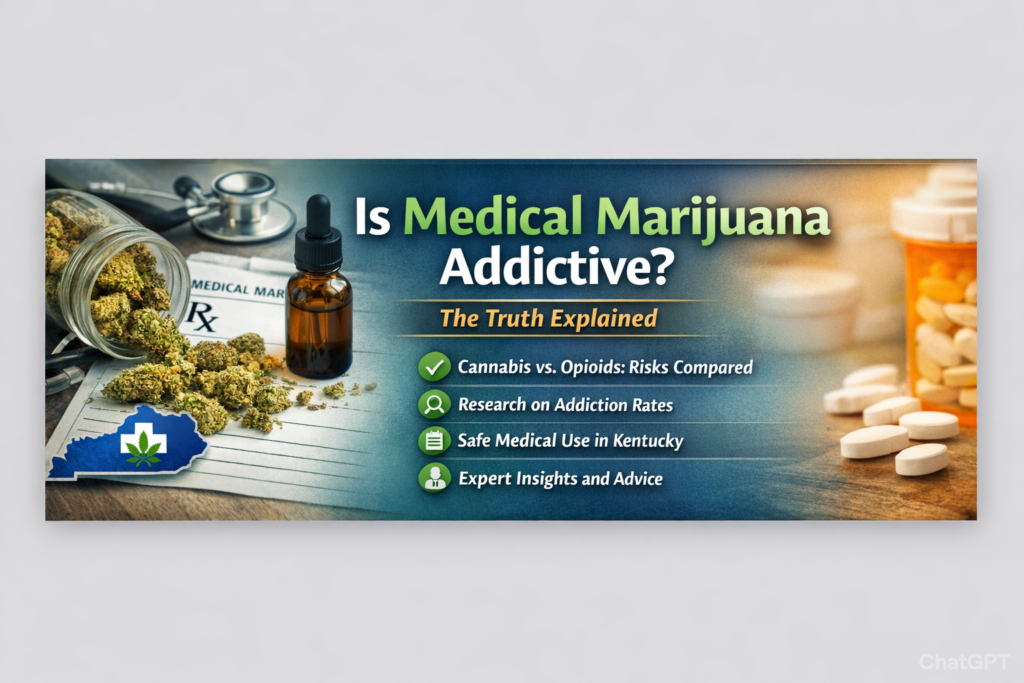
If you’re thinking about medical marijuana, especially as an alternative to opioids or other prescription medications, one question almost always comes up:
“Is medical marijuana addictive?”
It’s a reasonable concern. Many patients exploring cannabis are doing so because they want relief from pain, anxiety, PTSD, or other conditions, but they don’t want to risk dependency.
So let’s talk about this honestly and clearly.
The short answer is:
Yes, cannabis can be habit-forming for some people. But its addiction risk is significantly lower than many prescription medications, particularly opioids.
Here’s what that really means.
Addiction vs. Dependence: What’s the Difference?
When doctors use the word addiction, we’re referring to a medical condition called substance use disorder. That includes:
- Strong cravings
- Loss of control over use
- Continued use despite negative consequences
- Interference with work, relationships, or health
That’s different from physical dependence, which simply means your body adapts to a substance.
For example, caffeine causes dependence. Certain antidepressants can cause dependence. That doesn’t mean they cause addiction.
So the actual question isn’t whether your body can adjust to cannabis. The question is:
How often does cannabis cause compulsive, harmful use?
What Research Says About Cannabis Addiction
According to data from the National Institute on Drug Abuse:
- About 9–10% of cannabis users may develop cannabis use disorder.
- That number increases to around 17% for those who begin use during adolescence.
- Daily heavy users are at higher risk than occasional or medically supervised users.
Now compare that to other substances:
- Nicotine addiction rates exceed 30%.
- Alcohol use disorder affects roughly 15% of users.
- Long-term prescription opioid use carries a significantly higher risk of dependence and misuse than cannabis.
(Source: Centers for Disease Control and Prevention – Opioid Basics
https://www.cdc.gov/drugoverdose/opioids/index.html
This doesn’t mean cannabis has no risk. It means the risk exists, but it is lower compared to many commonly used substances.
How Cannabis Affects the Brain
Opioids bind directly to opioid receptors in the brain and can suppress breathing at high doses. That’s why overdose is such a serious concern with opioid medications.
Cannabis works differently.
It interacts with the body’s endocannabinoid system, a network involved in regulating pain, mood, sleep, appetite, and inflammation.
THC does activate dopamine, the brain’s reward chemical. That’s why it can feel reinforcing. But cannabis does not suppress respiratory function, and there are no documented fatal overdoses caused by cannabis alone.
When withdrawal symptoms occur after stopping cannabis, they are typically mild and may include:
- Irritability
- Sleep changes
- Reduced appetite
- Mild anxiety
These symptoms are generally temporary and less severe than opioid withdrawal.
Medical Marijuana vs. Opioids: A Safety Perspective
Many patients asking about addiction are comparing medical marijuana to opioids.
Here’s what we know from research and clinical practice:
Opioids carry:
- High addiction potential
- Escalating dose tolerance
- Risk of severe withdrawal
- Risk of fatal overdose
Medical marijuana carries:
- Lower addiction risk
- Mild withdrawal profile
- No fatal overdose risk
- Less systemic harm when used responsibly
Several studies, including research published in JAMA Internal Medicine and Health Affairs, have shown that states with medical cannabis laws have experienced lower opioid prescription rates and reduced opioid-related harms.
While cannabis is not a universal replacement for opioids, it may help reduce reliance on them for some patients.
Does Medical Supervision Reduce Risk?
Yes, it does.
When cannabis is used medically, patients typically:
- Receive an evaluation from a licensed provider
- Use specific, controlled doses
- Treat defined medical conditions
- Follow structured guidance
That is very different from recreational, high-frequency, unmonitored use.
In Kentucky, medical marijuana access requires evaluation and certification, which creates a structured medical framework. This oversight reduces the likelihood of misuse.
Who Should Be More Cautious?
Certain individuals may need closer evaluation before using medical marijuana, including:
- Those with a history of substance misuse
- Individuals with untreated mental health conditions
- Patients using high-THC products daily
- Adolescents
This doesn’t automatically disqualify someone. It simply means medical guidance matters.
What About Long-Term Use?
Long-term research is ongoing, but current evidence suggests:
- No documented fatal overdose risk
- No severe organ toxicity at therapeutic levels
- Lower mortality risk compared to chronic opioid therapy
That said, cannabis should always be part of a monitored treatment plan. Regular follow-ups help ensure benefits outweigh risks.
What This Means for Kentucky Patients
If you’re in Kentucky and considering medical marijuana, here’s what matters:
- The program requires physician certification.
- You receive structured guidance.
- Your use is tied to a qualifying condition.
This medical oversight is important. It reduces the risk of problematic use and ensures cannabis is being used intentionally for symptom management.
A Practical Medical Perspective
No medication is completely risk-free.
But when comparing medical marijuana to opioids, benzodiazepines, or certain sleep medications, cannabis generally carries:
- A lower addiction risk
- A significantly safer overdose profile
- Milder withdrawal symptoms
- Fewer life-threatening complications
The goal in medicine is not to find something with zero risk. The goal is to choose the safest effective option for your specific condition.
Is medical marijuana addictive?
It can be for some individuals. But compared to many prescription medications, especially opioids, the addiction risk is lower, and there is no documented fatal overdose risk from cannabis alone.
When used responsibly under medical supervision, medical marijuana can be a safe and effective option for many patients.
If you’re concerned about dependency, the best step is having an honest discussion with a qualified provider who understands both the benefits and the risks.
How Med Card District Can Help
If you’re in Kentucky and considering medical marijuana, Med Card District helps you approach the process safely and confidently.
We connect you with licensed medical professionals who evaluate your condition, review your medical history, and determine whether medical cannabis is appropriate for you.
We guide you through:
- The eligibility evaluation
- Understanding addiction risk and safe use
- The Kentucky medical marijuana card process
- Compliance with state regulations
Our focus is not just approval, it’s responsible, informed care.
If you’re exploring medical marijuana as a safer alternative to more addictive medications, we’re here to help you make that decision the right way.
Schedule your evaluation today and take the next step toward informed, medically supervised relief.