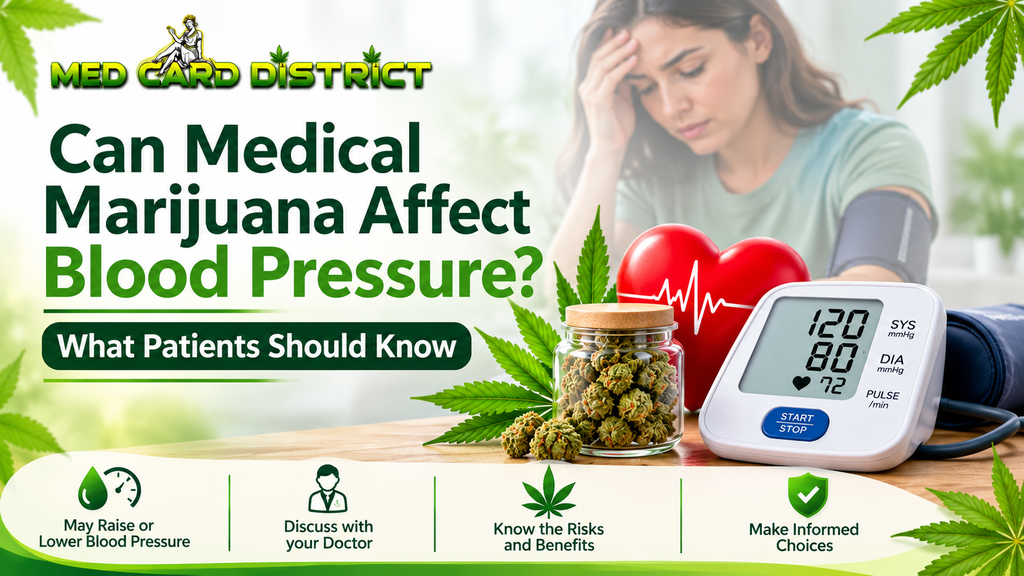
One question patients often ask before starting medical marijuana therapy is:
“Can medical marijuana affect my blood pressure?”
It’s an important question, especially for individuals who already have high blood pressure, take hypertension medications, or have an underlying heart condition.
The short answer is yes. Medical marijuana can affect blood pressure, but its effects are not the same for everyone.
Depending on the cannabinoid, dosage, frequency of use, and individual health factors, cannabis may temporarily increase heart rate and blood pressure or contribute to a drop in blood pressure, particularly when standing up.
At Med Card District, educating patients about the potential benefits and risks of medical cannabis is an important part of informed treatment decisions.
Let’s explore how medical marijuana affects blood pressure, what symptoms patients should recognize, and what precautions are important before starting treatment.
How Does Medical Marijuana Affect Blood Pressure?
Medical marijuana contains compounds called cannabinoids, including tetrahydrocannabinol (THC) and cannabidiol (CBD). These compounds interact with systems in the body that influence several physiological functions, potentially including cardiovascular activity.
According to the Centers for Disease Control and Prevention (CDC), cannabis can increase heart rate and raise blood pressure immediately after use. However, cannabis may also contribute to a drop in blood pressure in some situations, particularly when a person changes position from sitting or lying down to standing.
This means cannabis does not have one predictable effect on blood pressure.
For example, one person might experience a faster heartbeat shortly after using a THC-containing product, while another might feel dizzy when standing up. Individual responses can vary, and research has not established cannabis as a safe or effective treatment for high blood pressure.
Can Medical Marijuana Raise Blood Pressure?
Yes. Cannabis use can cause a temporary increase in blood pressure, particularly shortly after use. It can also increase heart rate, which may be a concern for people with certain cardiovascular conditions.
THC is the primary intoxicating compound in cannabis. It can affect the body’s nervous system and influence cardiovascular responses. The size and duration of these effects can vary depending on the dose, product, method of consumption, and individual health factors.
People with high blood pressure should not assume that medical marijuana is harmless simply because it is used for medical purposes.
It is particularly important to discuss cannabis use with a healthcare professional if you have:
- High blood pressure that is not well controlled.
- A history of heart disease or stroke.
- An irregular heartbeat or another heart rhythm condition.
- A history of chest pain or other cardiovascular symptoms.
- Prescription medications that affect blood pressure or heart function.
A healthcare professional can help assess whether cannabis may present additional risks based on your medical history and current treatment.
Can Medical Marijuana Lower Blood Pressure?
Cannabis may also cause blood pressure to fall in some people. One possible effect is called orthostatic hypotension, which occurs when blood pressure drops after a person stands up from sitting or lying down.
When this happens, the brain may briefly receive less blood flow than usual, causing symptoms such as:
- Dizziness or lightheadedness.
- Blurred vision.
- Weakness when standing.
- Feeling faint.
- Fainting in more serious cases.
These symptoms can increase the risk of falls and injuries, particularly among older adults and people who already have low blood pressure.
If you experience dizziness after using cannabis, sit or lie down somewhere safe. Avoid driving or operating machinery while you feel unwell. Repeated episodes should be discussed with a healthcare professional.
Important: Cannabis should not be used as a substitute for prescribed blood pressure medication. Never stop or change a prescribed treatment without consulting your healthcare provider.
Does THC or CBD Affect Blood Pressure Differently?
CBD and THC are two different cannabinoids, and they do not produce identical effects.
THC and Blood Pressure
THC is responsible for much of the intoxicating effect associated with cannabis. It can temporarily increase heart rate and may raise blood pressure shortly after use. It may also contribute to dizziness or a drop in blood pressure when standing.
The effects can vary with the amount consumed, product potency, frequency of use, and individual sensitivity.
CBD and Blood Pressure
CBD is a non-intoxicating cannabinoid, but that does not automatically make every CBD product safe for people with cardiovascular conditions.
Some small studies have explored whether CBD affects blood pressure, but the available evidence is not sufficient to establish CBD as a reliable treatment for hypertension. CBD may also interact with certain prescription medications, including medicines processed by the liver.
Patients should not use CBD products to manage high blood pressure without medical guidance. Product quality, concentration, and labeling can also vary.
Are THC-Free Products Risk-Free?
Not necessarily. A product marketed as THC-free may still pose concerns depending on its ingredients, quality, other active compounds, and potential medication interactions. Patients should review product information carefully and discuss any intended use with a qualified healthcare professional.
What Factors Influence Blood Pressure Changes?
Several factors may affect how cannabis influences blood pressure.
1. THC concentration: Products with different THC levels can produce different effects. A stronger product may not be suitable for someone sensitive to cannabis.
2. Method of consumption: Inhaled cannabis may act more quickly than edible products. Edibles can take longer to produce effects, making it difficult to judge their onset.
3. Existing health conditions: People with hypertension, low blood pressure, heart disease, or heart rhythm disorders may face different risks.
4. Medications: Cannabis and CBD may interact with certain prescription medicines, including some cardiovascular medications. Tell your healthcare provider about all cannabis products and medications you use.
5. Individual response: Age, tolerance, general health, and sensitivity to cannabinoids can influence the effects.
Is Medical Marijuana Safe for People With High Blood Pressure?
There is no single answer that applies to everyone. Safety depends on factors such as how well blood pressure is controlled, whether other cardiovascular conditions are present, which medications a person takes, and the type of cannabis product being considered.
The American Heart Association has highlighted concerns about cannabis and cardiovascular health, including potential effects on heart rate, blood pressure, and medication interactions. Research is still developing, and important questions remain about the short- and long-term effects of different cannabis products.
If you have high blood pressure, consider discussing the following questions with your healthcare provider:
- Could cannabis interact with my current medications?
- Could my heart or blood pressure condition increase my risk of side effects?
- What symptoms should prompt me to stop using a product and seek medical advice?
- Are there safer, better-supported options for managing my symptoms?
- Would I need additional monitoring if I use a cannabis product?
A medical marijuana evaluation can help determine whether you meet the relevant program’s eligibility requirements, but eligibility does not automatically mean that cannabis is appropriate for every medical situation.
Warning Signs to Take Seriously
If you experience unusual symptoms after using cannabis, do not assume they are harmless or simply part of the expected effects.
Contact a healthcare professional if you experience recurring dizziness, palpitations, or unusual changes in how you feel after using a cannabis product.
Seek emergency medical care if you experience chest pain, difficulty breathing, fainting with ongoing symptoms, sudden weakness, confusion, or other signs that could indicate a heart attack or stroke.
Do not delay emergency care while waiting for cannabis effects to wear off.
How Can Patients Make Informed Decisions About Medical Marijuana?
Before considering medical marijuana, it is helpful to understand your medical history, current medications, and the reason you are considering treatment.
Here are a few practical steps:
Discuss your health history. Tell your healthcare provider if you have high blood pressure, low blood pressure, heart disease, or previous cardiovascular problems.
Review your medications. Provide a complete list of prescription medicines, over-the-counter drugs, supplements, and cannabis products you use.
Understand the product. Ask about cannabinoid content, potential side effects, product quality, and possible interactions.
Avoid self-treatment for hypertension. Medical marijuana is not an established replacement for standard blood pressure treatment.
Monitor symptoms with medical guidance. If your healthcare provider recommends monitoring your blood pressure, follow their instructions and report concerning changes.
These steps can help you discuss potential benefits and risks more clearly with your healthcare team.
How Med Card District Can Help
If you are considering medical marijuana for a qualifying condition, understanding the evaluation process is an important first step.
Med Card District provides online medical marijuana evaluations for eligible patients in supported states. During an evaluation, a qualified practitioner can review your medical history and determine whether you meet the applicable program’s certification requirements.
If you have high blood pressure or take medication for a cardiovascular condition, share that information during your evaluation. You should also discuss potential cannabis-related risks and medication interactions with the healthcare professional responsible for managing your blood pressure.
Medical marijuana certification does not guarantee that cannabis is suitable for your condition. Your healthcare provider can help you consider your individual circumstances and discuss appropriate treatment options.
Frequently Asked Questions
1. Can medical marijuana cause high blood pressure?
Yes. Cannabis can temporarily increase blood pressure and heart rate after use. The response varies between individuals and may be more concerning for people with existing cardiovascular conditions.
2. Can medical marijuana cause low blood pressure?
Yes. Cannabis can contribute to a drop in blood pressure in some people, particularly when standing up. This may cause dizziness, blurred vision, or fainting.
3. Is CBD safe for people with high blood pressure?
CBD should not automatically be considered safe for everyone with hypertension. Evidence does not establish CBD as a reliable treatment for high blood pressure, and it can interact with certain medications. Consult a healthcare professional before using it.
4. Can I use medical marijuana while taking blood pressure medication?
Possibly, but you should consult your healthcare provider first. Cannabis and CBD may interact with certain medications, and your individual cardiovascular health can influence the risks.
5. Should I stop my blood pressure medication if I use medical marijuana?
No. Do not stop, reduce, or replace prescribed blood pressure medication with cannabis unless the clinician managing your treatment specifically advises you to change your medication plan.
6. Does medical marijuana treat hypertension?
Current evidence does not establish medical marijuana as a safe and effective treatment for hypertension. People with high blood pressure should continue following their clinician’s treatment recommendations.
7. When should I seek medical help after using cannabis?
Seek emergency care for chest pain, difficulty breathing, sudden weakness, or other potentially serious symptoms. Repeated dizziness, palpitations, or unusual changes in how you feel should also be discussed with a healthcare professional.
Final Thoughts
Medical marijuana can affect blood pressure in different ways. It may temporarily raise blood pressure and heart rate, while in some people it may contribute to lower blood pressure, dizziness, or fainting.
These effects make it important to consider your medical history, medications, and individual risk factors before using cannabis. People with hypertension or existing heart conditions should seek professional guidance rather than relying on cannabis to control blood pressure.
If you are considering medical marijuana for a qualifying condition, Med Card District can help you learn about the evaluation process in supported states. Discuss your cardiovascular health and medication use openly with your healthcare providers so you can make an informed decision.