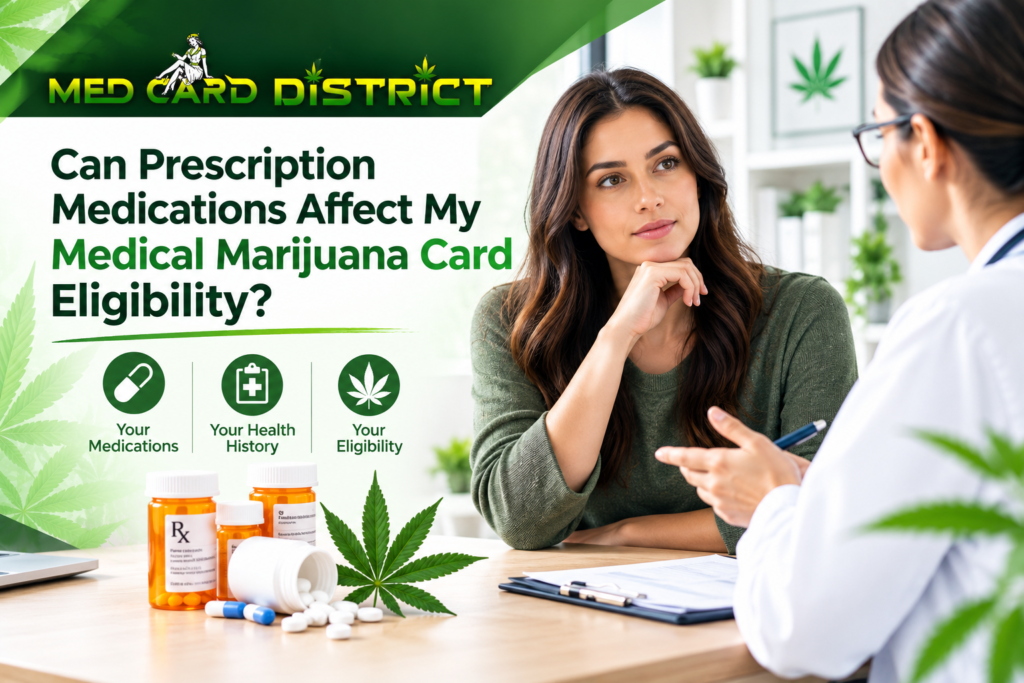
If you take prescription medication and are considering medical marijuana, you may have an important question:
Can the medications I already take affect my ability to get a medical marijuana card?
In most cases, simply taking prescription medication does not automatically mean you cannot apply for or receive a medical marijuana card. However, your medications are important information for the healthcare provider evaluating you.
A medical marijuana doctor may need to review your medications, medical history, current symptoms, and overall health before deciding whether medical cannabis may be appropriate for you.
Because medical marijuana programs and eligibility requirements vary by state, the exact rules depend on where you live.
Can You Get a Medical Marijuana Card While Taking Prescription Medication?
Taking prescription medication does not automatically disqualify you from being evaluated for a medical marijuana card.
During an evaluation, a healthcare provider may consider your medical condition, symptoms, current medications, previous treatments, and other relevant health information.
The purpose is not simply to determine whether you take medication. The provider needs to understand your overall medical situation and whether medical cannabis may be appropriate under the rules that apply in your state.
Medical cannabis programs are regulated differently across the United States, so patients should check their state’s current requirements. NCSL
Why Does Your Doctor Need to Know About Your Medications?
Your medication list gives the doctor important information about your health and current treatment.
Some medicines can interact with other drugs or substances. Drug interactions can sometimes change how a medication works or increase the possibility of unwanted effects. The FDA recommends that patients tell their healthcare providers about prescription and over-the-counter medicines, supplements, vitamins, and other products they use. U.S. Food and Drug Administration
That is why your medical marijuana evaluation should include an honest discussion about the medications you currently take.
What Medications Should You Tell the Doctor About?
You should tell the healthcare provider about all medications and supplements you regularly use, not just the prescription medicines you think are important.
This may include:
- Prescription medications
- Over-the-counter medications
- Vitamins
- Dietary supplements
- Herbal products
- Sleep medications
- Pain medications
- Medications for anxiety or depression
- Blood pressure medications
- Blood thinners
- Other treatments prescribed by your healthcare providers
If you’re not sure whether something is relevant, tell the doctor anyway.
Your healthcare provider can determine whether that medication or supplement is important to the evaluation.
Can Prescription Medication Prevent You From Getting a Medical Marijuana Card?
Not necessarily.
There is an important difference between being eligible to apply for a medical marijuana card and whether medical cannabis is medically appropriate for you.
A patient may meet a state’s eligibility requirements but still need to discuss medication safety with the evaluating healthcare provider.
The doctor may consider:
- Your qualifying condition
- Your current symptoms
- Your medical history
- Your current medications
- Previous treatments
- Potential medication interactions
- Potential risks and benefits
- Other relevant health factors
The final decision depends on the applicable state rules and the provider’s medical evaluation.
Can Medical Marijuana Interact With Prescription Medications?
Potentially, yes.
Cannabis may interact with certain medications; it’s important to understand the potential risks before starting treatment. Learn more about medical marijuana and medication interactions and the medications that may require additional caution.
The FDA notes that drug interactions can sometimes make a medicine less effective, cause unexpected side effects, or increase the effects of a particular drug. U.S. Food and Drug Administration
This doesn’t mean that every medication is incompatible with medical marijuana.
It means that your individual medications should be reviewed rather than making assumptions based on general information online.
What If You Take Several Medications?
Tell your evaluating doctor about all of them.
Taking multiple medications can make it especially important for healthcare providers to understand your complete medication list.
If you see multiple doctors, it can also be helpful to keep an updated list of everything you take. The FDA specifically recommends making healthcare providers aware of the medicines, supplements, and other products you use. U.S. Food and Drug Administration
Your medication list should ideally include:
- Medication name
- Dosage
- How often you take it
- Why you take it
- Any known side effects
If you don’t remember all the details, you can bring the medication containers or a current medication list to your appointment.
Should You Stop Taking Your Prescription Medication Before Your Evaluation?
No. Do not stop or change a prescribed medication simply because you are considering medical marijuana.
If you are concerned about a possible interaction, discuss it with the healthcare professional who manages your medication and with the medical marijuana provider.
Stopping some prescription medications suddenly can cause problems or worsen the condition they are treating.
Your healthcare providers can help you determine whether any changes are medically appropriate.
What Should You Tell the Medical Marijuana Doctor?
Be completely honest about your current treatment.
Tell the provider:
- What prescription medications you take
- How often you take them
- What conditions they are treating
- Whether they are helping
- Whether you’ve experienced side effects
- What other treatments you’ve tried
- Whether you’ve used cannabis before
- Any supplements or over-the-counter medicines you use
You don’t need to decide which information is important before your appointment.
Give the doctor the complete picture and allow them to determine what matters medically.
What If You Don’t Know the Names of Your Medications?
That’s okay.
Before your appointment, try to find your medication bottles, pharmacy records, prescription list, or patient portal information.
Having the exact names and doses can make the discussion easier.
If you cannot find the information, tell your provider what you know rather than guessing.
Can a Medical Marijuana Doctor See Your Prescription History?
This depends on the healthcare system, state, provider, and applicable privacy and prescription-monitoring requirements.
You should not assume that a doctor already has access to every medication you take.
That’s another reason why bringing an accurate medication list to your appointment is important.
What Questions Should You Ask Your Doctor?
If you’re taking prescription medication and considering medical marijuana, you may want to ask:
- Could medical cannabis interact with any of my medications?
- Are there specific side effects I should watch for?
- Should I speak with another doctor or pharmacist before using cannabis?
- Are there reasons medical cannabis may not be appropriate for me?
- What should I do if I experience an unwanted effect?
- What information should I give my other healthcare providers?
- What should I know before using medical cannabis for the first time?
Don’t hesitate to ask questions if you’re uncertain about anything.
Does Your Prescription Medication Affect Your State Eligibility?
This is where patients need to be careful with general online information.
Medical marijuana laws are state-specific. Each state establishes its own medical cannabis program, including rules concerning qualifying conditions, certification, registration, and patient access. NCSL
Therefore, there is no single nationwide answer that says every prescription medication either qualifies or disqualifies a patient.
If you live in Kentucky, you can review the current kentucky medical marijuana card requirements before scheduling an evaluation.
What Should You Bring to Your Medical Marijuana Appointment?
If you’re currently taking prescription medication, consider having the following information ready:
- Government-issued identification
- Your current medication list
- Prescription medication bottles, if available
- Relevant medical records
- Information about your diagnosis
- A description of your symptoms
- Previous treatment information
- A list of questions for your healthcare provider
- Information about supplements and over-the-counter medications
You may not need every item for every appointment, but being prepared can make the evaluation easier.
What Happens During the Evaluation?
Your healthcare provider may discuss your medical condition, symptoms, medical history, previous treatments, and current medications.
They may also ask about your treatment goals and previous experience with cannabis.
Depending on your state, you may be able to complete your evaluation through a medical marijuana telehealth evaluation instead of visiting a clinic in person.
A medical marijuana evaluation should not be viewed as an automatic approval process.
The purpose is to determine whether you meet the relevant requirements and whether medical cannabis may be an appropriate option for your circumstances.
What If Your Doctor Says You Shouldn’t Use Medical Marijuana?
Listen to the medical advice you receive.
If your provider identifies a potential medication interaction, medical concern, or another reason cannabis may not be appropriate, ask questions so you understand the concern.
You can also ask whether there are other treatment options worth discussing with your healthcare team.
The goal should be safe and appropriate care, not simply obtaining a medical marijuana card.
Medical Marijuana and Prescription Medications: What Patients Should Remember
If you take prescription medication, you don’t necessarily need to assume that you cannot qualify for medical marijuana.
Instead:
- Tell the evaluating doctor about every medication you take.
- Include over-the-counter medicines and supplements.
- Don’t stop prescribed medication on your own.
- Ask about potential interactions.
- Keep your medication list updated.
- Follow the medical advice provided by your healthcare professionals.
- Check the medical marijuana requirements for your state.
Being open about your medications helps your healthcare provider make a more informed assessment.
How Med Card District Can Help
If you’re considering a medical marijuana card but currently take prescription medications, you don’t have to figure out the evaluation process alone.
Med Card District helps patients connect with medical professionals for medical marijuana evaluations in the states it serves.
During an evaluation, patients can discuss their medical condition, current treatment, medications, and questions about medical cannabis with a qualified healthcare professional.
Med Card District can also help patients understand the steps involved in the medical marijuana evaluation process.
However, eligibility and requirements vary by state, and a medical evaluation does not guarantee approval.
If you’re in Maryland, see our complete maryland medical marijuana card process guide for current eligibility, registration, evaluation, and renewal information.
Final Thoughts
Taking prescription medication does not automatically mean you cannot get a medical marijuana card.
However, your medications are an important part of your medical history and should always be discussed with the healthcare provider evaluating you.
Because medications can interact with other drugs or substances, it is important to give your doctor an accurate list of everything you take.
Don’t stop or change prescription medication on your own just because you’re considering medical cannabis. Instead, discuss your concerns with the appropriate healthcare professionals.
If you’re thinking about applying for a medical marijuana card, Med Card District can help you take the next step toward a professional evaluation and provide information about the process in the states it serves.
Frequently Asked Questions
Can I get a medical marijuana card if I take prescription medication?
Taking prescription medication does not automatically prevent you from getting a medical marijuana card. Your eligibility depends on your state’s requirements and your individual medical evaluation.
Should I tell the medical marijuana doctor about all my medications?
Yes. Tell the doctor about prescription medications, over-the-counter medicines, supplements, vitamins, and other products you regularly use.
Should I stop my prescription medication before getting a medical marijuana card?
No. Never stop or change a prescribed medication without speaking with the healthcare professional responsible for your care.
Can prescription medications interact with medical marijuana?
Potential interactions are possible. Your healthcare provider or pharmacist can help assess your individual medication combination and potential risks.
Can I get approved if I take multiple medications?
Taking multiple medications does not automatically mean you cannot qualify. The healthcare provider will consider your overall medical situation and the requirements of your state’s program.
What should I bring to my medical marijuana appointment?
Bring identification and, when available, your medication list, relevant medical records, information about your diagnosis and symptoms, and any questions you want to discuss with the provider.
Does every state have the same medical marijuana requirements?
No. Medical cannabis programs are established and regulated at the state level, so eligibility and application requirements vary. NCSL
Can Med Card District help me if I take prescription medications?
Med Card District can help eligible patients connect with medical professionals for medical marijuana evaluations in the states it serves. Your healthcare provider will determine whether medical cannabis is appropriate based on your individual circumstances and applicable requirements.