If you’ve ever dealt with long-term pain, you’ve probably heard this question before:
“Do I really need to stay on opioids… or is there a safer option?”
It’s a fair question. Opioids have helped a lot of people manage pain, but they’ve also caused serious problems. Addiction, dependence, and overdose aren’t rare side effects. They’re real risks.
That’s why more patients, and doctors, are looking at medical marijuana and asking if it might be a safer alternative.
Let’s talk about it honestly!
First, Let’s Talk About Opioids
Opioids are strong pain medications. You might recognize names like oxycodone, hydrocodone, morphine, or fentanyl.
They work by blocking pain signals in the brain. That’s why they can be very effective, especially for short-term or severe pain.
But here’s the problem.
Over time, your body gets used to them. You need higher doses to get the same relief. And stopping suddenly can cause withdrawal symptoms that are uncomfortable and, in some cases, dangerous.
Even when taken exactly as prescribed, opioids can:
- Lead to physical dependence
- Increase the risk of overdose
- Affect breathing
- Create a strong cycle of tolerance
This is why doctors are much more cautious with opioids today than they were in the past.
So Where Does Medical Marijuana Fit In?
Medical marijuana uses cannabis in a controlled, medical setting to help manage symptoms like pain, inflammation, muscle spasms, and nausea.
The two main compounds you’ll hear about are:
- THC, which helps with pain and muscle tension
- CBD, which helps with inflammation and doesn’t cause a “high”
Instead of targeting opioid receptors, cannabis works with your body’s endocannabinoid system, which helps regulate pain, sleep, mood, and inflammation.
That difference matters.
Let’s Compare Them Side by Side
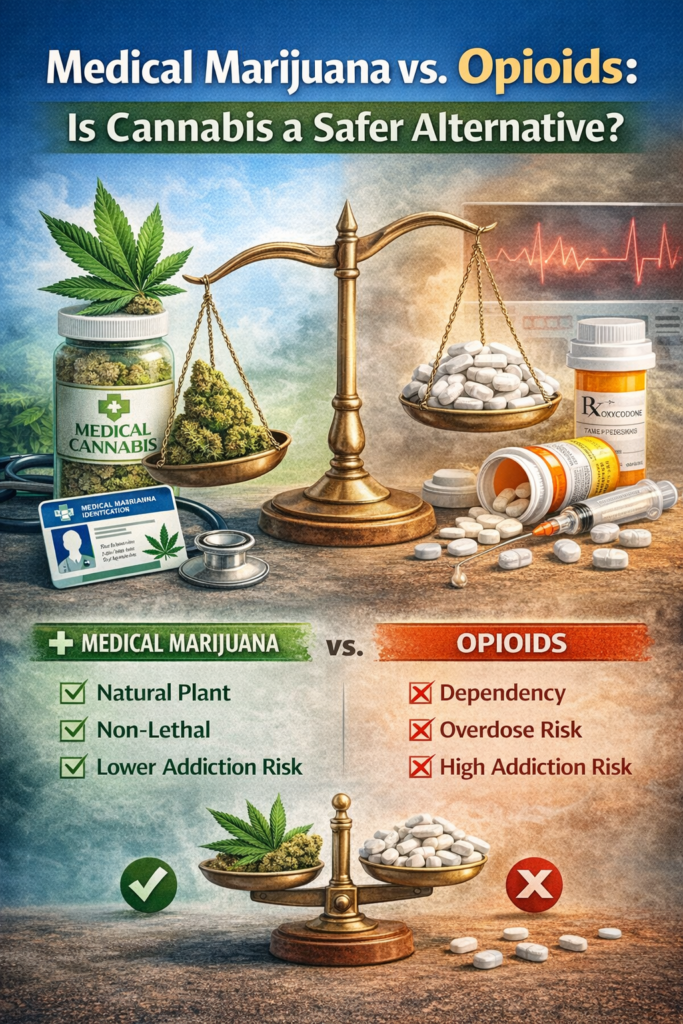
Overdose Risk
This is a big one.
Opioids can slow breathing. At high doses, breathing can stop completely. That’s what makes overdoses so dangerous.
Medical marijuana doesn’t work that way. Cannabis does not suppress breathing, and there are no confirmed cases of fatal overdose from marijuana alone.
From a safety standpoint, that’s a major difference.
Addiction and Dependence
Opioids have a high risk of addiction. Physical dependence can happen quickly, even with medical supervision.
Cannabis can be habit-forming for some people, but the addiction risk is much lower. Withdrawal symptoms, when they occur, are usually mild compared to opioids.
That doesn’t mean cannabis has zero risk, but the level of risk is very different.
Long-Term Use
Long-term opioid use can affect hormones, immune function, and even increase pain sensitivity over time.
With medical marijuana, long-term effects are still being studied, but current research suggests fewer severe complications when it’s used responsibly and under medical guidance.
Many patients are able to use lower doses consistently without constantly increasing them.
Pain Relief
Opioids tend to work best for short-term pain, like after surgery or a serious injury.
Medical marijuana often works better for:
- Chronic pain
- Nerve pain
- Inflammatory conditions
- Arthritis, multiple sclerosis, and cancer-related pain
Some patients even find that cannabis allows them to reduce their opioid dose — or stop opioids entirely — with a doctor’s supervision.
Can Medical Marijuana Help Reduce Opioid Use?
In many cases, yes.
Studies have shown that in states with medical marijuana programs, opioid prescriptions and opioid-related hospital visits tend to be lower.
Source: JAMA Internal Medicine
That doesn’t mean cannabis replaces opioids for everyone. But for many patients, it becomes a way to manage pain with fewer risks.
Is Medical Marijuana Right for Everyone?
No, and that’s important to say.
Medical marijuana may not be appropriate if you:
- Have certain mental health conditions
- Have a history of substance misuse
- Are pregnant or breastfeeding
- Need to avoid any cognitive impairment
That’s why medical guidance matters. This isn’t about guessing or experimenting on your own.
A Quick Safety Reminder
- Never stop opioids suddenly without talking to your doctor
- Start cannabis at low doses if prescribed
- Avoid driving or working while impaired
- Follow your state’s medical marijuana laws
The goal is better pain control, not new problems.
A Doctor’s Honest Take
From a medical perspective, opioids are powerful but risky, especially long-term.
Medical marijuana isn’t perfect, but for many patients, it offers pain relief with a much safer profile.
This isn’t about choosing one side forever. It’s about choosing the safest, most effective option for your situation, and reevaluating when needed.
How Medcard District Can Help You
If you’re considering medical marijuana as an alternative to opioids, the first step is making sure you’re doing it legally, safely, and with proper medical guidance.
That’s where Med Card District comes in.
We connect Kentucky patients with licensed medical professionals who understand pain management, cannabis medicine, and state regulations. Our process is simple and patient-focused:
- We evaluate your condition to see if medical marijuana may be appropriate
- We explain dosing, safety, and what to expect, in plain language
- We guide you through the Kentucky medical marijuana card process step by step
- We make sure you understand your legal limits and responsibilities
There’s no pressure, no confusing paperwork, and no guessing. Just clear medical guidance from start to finish.
If opioids no longer feel like the right long-term option for you, Med Card District helps you explore medical marijuana the right way, informed, compliant, and supported by professionals.
Your health deserves a safer conversation. We’re here to help you have it.