Dry mouth is one of the most common side effects reported by people who use medical marijuana. If you have recently started using medical cannabis and notice that your mouth feels unusually dry, sticky, or uncomfortable, you may be experiencing a condition known as xerostomia.
For medical marijuana patients, dry mouth can be more than a temporary inconvenience. Persistent dryness can make it difficult to speak, swallow, or eat comfortably and may also affect oral health over time.
But why does medical marijuana cause dry mouth? Is THC responsible, or can CBD cause it too? How long does cannabis-related dry mouth last, and what can you do to feel better?
In this guide, Med Card District explains what causes dry mouth after medical marijuana use, how it can affect your mouth, and practical ways to manage the symptoms.
What Is Dry Mouth?
Dry mouth, medically known as xerostomia, occurs when your mouth does not produce enough saliva.
Saliva plays an important role in maintaining oral health. It helps keep the mouth moist, makes chewing and swallowing easier, helps wash away food particles, and contributes to the protection of teeth and oral tissues.
When saliva production decreases, you may notice symptoms such as:
- A sticky or dry feeling in your mouth
- Increased thirst
- Difficulty swallowing or speaking
- A dry or rough tongue
- Bad breath
- Changes in taste
- Sore or irritated areas inside the mouth
- Increased difficulty wearing dentures, for people who use them
Occasional dry mouth is usually temporary. However, frequent or persistent dry mouth can increase the risk of dental problems and should not be ignored.
Why Does Medical Marijuana Cause Dry Mouth?
The main reason cannabis can cause dry mouth is related to how cannabinoids interact with the body’s endocannabinoid system.
Cannabis contains compounds called cannabinoids, including THC and CBD. These compounds interact with cannabinoid receptors throughout the body.
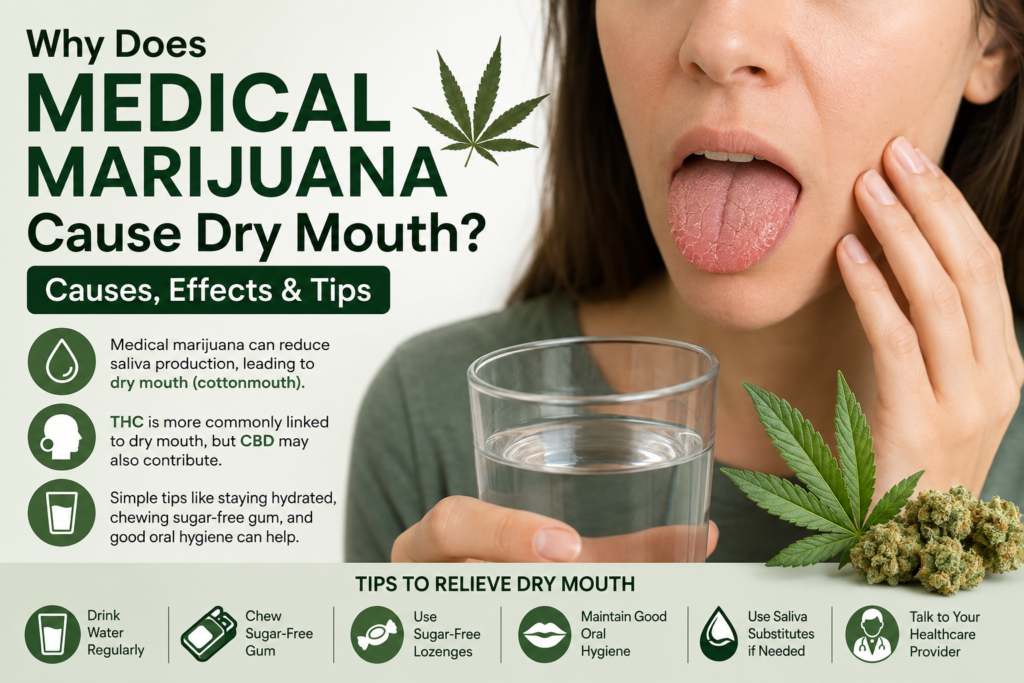
THC, in particular, can influence the nervous-system processes involved in salivary secretion. When these processes are affected, the salivary glands may produce less saliva, resulting in the familiar dry-mouth sensation.
This is sometimes referred to as “cottonmouth.”
Importantly, experiencing dry mouth does not necessarily mean that something is wrong with your medical marijuana treatment. It can be a known side effect of cannabis use. However, persistent or severe symptoms deserve attention.
Is THC or CBD More Likely to Cause Dry Mouth?
THC is generally more strongly associated with the classic cannabis-related dry-mouth effect. However, products containing CBD or THC may also be associated with changes in mouth dryness.
The experience can vary significantly between patients. Factors such as the product used, cannabinoid concentration, method of administration, frequency of use, other medications, hydration, and individual physiology can all influence side effects.
If you consistently experience uncomfortable dry mouth after using a particular medical cannabis product, talk with your healthcare professional about your experience rather than changing your treatment plan on your own.
How Long Does Medical Marijuana Dry Mouth Last?
The duration of dry mouth can vary from one person to another.
Some patients notice that the symptom improves as the effects of cannabis wear off. Others may experience dryness for several hours.
How long it lasts can depend on factors including:
- The amount of cannabis used
- THC and CBD concentrations
- Whether cannabis was inhaled or consumed orally
- How frequently you use medical marijuana
- Your hydration level
- Other medications or health conditions
- Individual differences in how your body processes cannabinoids
If dry mouth continues long after the effects of cannabis have worn off or happens frequently, consider discussing it with a healthcare professional or dentist.
Does Smoking or Vaping Make Dry Mouth Worse?
The method of cannabis administration can influence the overall experience.
Smoking and vaping expose the mouth and airways to heated substances, which may contribute to irritation or dryness. Edibles avoid direct exposure of the mouth and throat to smoke, but they can still produce cannabis-related dry mouth because cannabinoids are absorbed into the body.
Therefore, switching consumption methods does not necessarily eliminate dry mouth.
If you are considering changing how you use medical marijuana, speak with your healthcare provider or another qualified professional about the options appropriate for your situation.
10 Ways to Relieve Medical Marijuana Dry Mouth
If medical marijuana leaves your mouth feeling dry, several simple measures may help.
1. Drink Water Regularly
Small, frequent sips of water can help keep your mouth more comfortable.
Rather than waiting until you become very thirsty, keep water available and drink throughout the day.
2. Chew Sugar-Free Gum
Chewing sugar-free gum can stimulate saliva production.
Products containing xylitol may also be useful for oral health, although you should follow the product’s directions and avoid excessive consumption.
3. Use Sugar-Free Lozenges
Sugar-free lozenges can encourage saliva flow and may provide temporary relief when your mouth feels dry.
Avoid frequently sucking on sugary candy because prolonged sugar exposure can increase the risk of tooth decay.
4. Limit Alcohol and Excessive Caffeine
Alcohol can contribute to dehydration and may make dry-mouth symptoms more noticeable.
Some people also find that large amounts of caffeinated beverages worsen the sensation of dryness. If you notice this pattern, reducing your intake may help.
5. Avoid Tobacco
Tobacco can contribute to oral-health problems and may make an already uncomfortable mouth feel worse.
Avoiding tobacco is beneficial for both your general and oral health.
6. Consider an Alcohol-Free Mouthwash
Some mouthwashes can feel irritating or drying for people who already have xerostomia.
An alcohol-free mouthwash designed for dry mouth may be a more comfortable option.
7. Maintain Good Oral Hygiene
Dry mouth can reduce some of saliva’s natural protective effects.
Brush your teeth twice daily with fluoride toothpaste, floss regularly, and maintain routine dental visits.
8. Choose Moist Foods
If your mouth is particularly dry, foods with more moisture may be easier to chew and swallow.
Soups, yogurt, soft fruits, and other moisture-rich foods may be more comfortable than very dry foods.
9. Consider a Saliva Substitute
Artificial saliva products and dry-mouth gels are available over the counter.
A pharmacist, dentist, or healthcare professional can help you choose an appropriate product.
10. Talk to Your Healthcare Provider
If dry mouth is persistent, severe, or interfering with your daily life, tell your healthcare provider.
They can help determine whether cannabis, another medication, dehydration, or another condition may be contributing to the problem.
Can Medical Marijuana Dry Mouth Affect Your Teeth?
Yes. Persistent dry mouth can have consequences for oral health.
Saliva helps protect teeth and oral tissues. When saliva production remains low, the mouth may become more vulnerable to problems such as:
- Tooth decay
- Gum problems
- Bad breath
- Mouth irritation
- Difficulty swallowing
- Oral infections
This is why patients who regularly experience dry mouth should pay particular attention to dental hygiene and routine dental care.
If you use medical marijuana regularly and experience ongoing xerostomia, let your dentist know. This information can help them understand your oral-health risk factors.
When Should You Be Concerned About Dry Mouth?
Occasional dry mouth after medical marijuana use is generally not a reason to panic.
However, you should consider speaking with a healthcare professional if:
- Dry mouth happens frequently
- Symptoms continue for a prolonged period
- You have difficulty eating or swallowing
- You develop persistent mouth sores
- You notice significant tooth sensitivity or dental problems
- Dry mouth is interfering with sleep or daily activities
- You take other medications that may also cause dry mouth
A healthcare professional can help identify the underlying cause and determine whether any changes to your treatment should be considered.
Does Everyone Who Uses Medical Marijuana Get Dry Mouth?
No.
People respond differently to medical marijuana. One patient may experience significant dry mouth, while another may notice little or no change in saliva production.
The likelihood and severity of side effects can depend on the individual, the cannabis product, cannabinoid concentration, dose, administration method, and other factors.
Because of these differences, there is no single experience that applies to every medical marijuana patient.
Frequently Asked Questions
Does medical marijuana always cause dry mouth?
No. Dry mouth is a common reported side effect of cannabis, but not everyone experiences it, and severity varies between individuals.
Why does THC cause cottonmouth?
THC interacts with cannabinoid receptors and can influence the processes involved in saliva production. Reduced salivary flow can create the dry, sticky sensation commonly called cottonmouth.
Does CBD cause dry mouth?
CBD products may also be associated with dry mouth in some people. However, cannabis-related dry mouth is particularly associated with THC and cannabinoid activity.
How can I get rid of dry mouth after marijuana?
Drinking water, chewing sugar-free gum, using sugar-free lozenges, maintaining good oral hygiene, and using appropriate dry-mouth products may help. Persistent symptoms should be discussed with a healthcare professional.
Can dry mouth from medical marijuana damage teeth?
Persistent dry mouth can increase the risk of dental problems because saliva helps protect the teeth and oral tissues. Regular brushing, flossing, fluoride use, and dental checkups are important.
Should I stop using medical marijuana if I develop dry mouth?
Do not stop or change a prescribed or recommended treatment without discussing it with your healthcare provider. If dry mouth is bothersome, tell your provider so they can help you evaluate your options.
Final Thoughts
Dry mouth is a common concern among medical marijuana patients and is often related to the effects of cannabinoids on saliva production. Although it may be temporary, frequent or persistent dry mouth can affect comfort and oral health.
Simple measures such as drinking water, using sugar-free gum or lozenges, maintaining good dental hygiene, and choosing appropriate dry-mouth products may help manage symptoms.
If you are considering medical marijuana or already use it and are experiencing unwanted side effects, getting reliable medical guidance is important. Patients in Kentucky can also learn more about the Kentucky medical marijuana card process and state requirements.
Med Card District is committed to helping patients understand medical marijuana and navigate the medical-card process with clear, patient-focused information. If you are exploring whether you may qualify for a medical marijuana card, learn more about the process and speak with a qualified medical professional about your individual situation.
Medical Disclaimer: This article is intended for educational purposes only and is not a substitute for professional medical or dental advice. Medical marijuana laws, eligibility requirements, and treatment recommendations vary by state and individual circumstances. Always consult a qualified healthcare professional regarding your medical care.
External Source
NIDCR explains saliva’s role in keeping the mouth healthy: https://www.nidcr.nih.gov/health-info/dry-mouth